

Public Embarrassment
The failed promises of private equity in medicine

This post is a detour from my typical medical narrative. On its face, this is a discussion of the increasing role private equity (PE) is playing in healthcare. But for all the discussion of the economics of PE, the problem is really a human one.
As a physician, my opinion of PE in medicine was sour even before I became a patient myself. I trained in Massachusetts and now live in Pennsylvania—both states where PE bankruptcies have affected hospitals and people. When I fell unexpectedly ill, I was fortunate to live close to hospitals that were well-staffed—and open. In my opinion, PE doesn’t belong in a lot of places, perhaps least of all medicine.
The Lemonade Stand
Let’s take a detour to make lemonade. Bear with me.
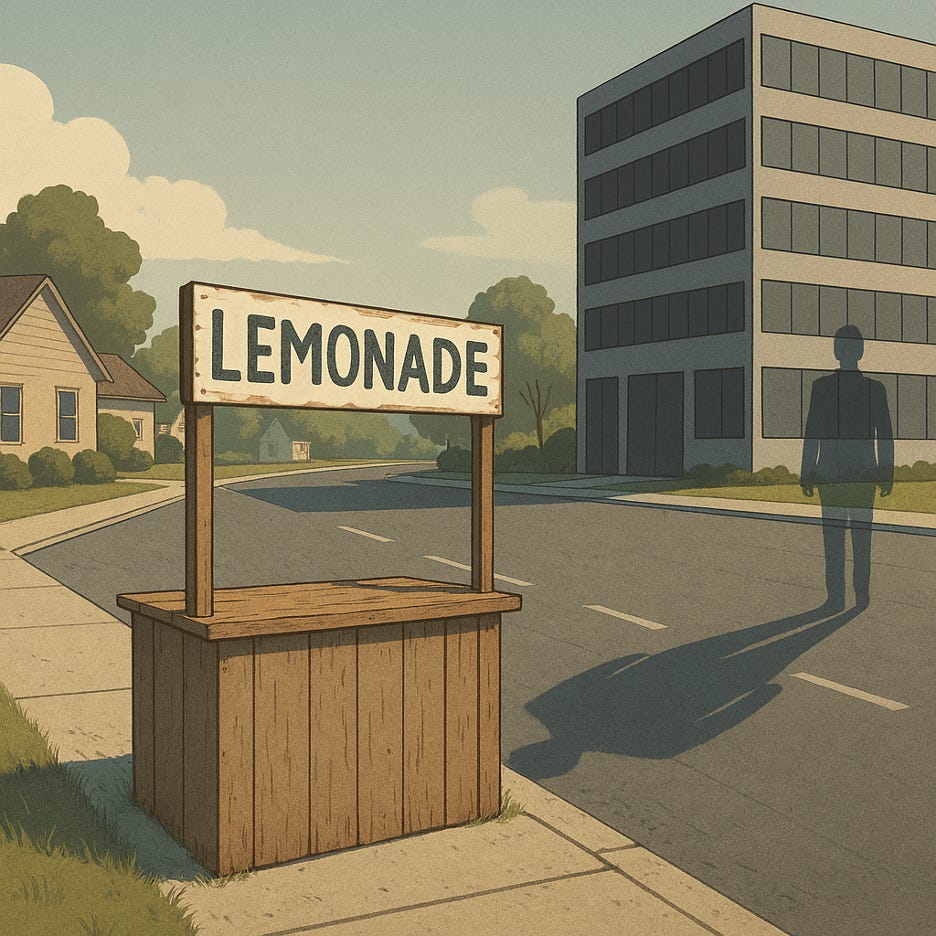
Imagine you’re twelve, and you have a lemonade stand. You make a modest profit—enough to keep going—and you like the lemonade stand. You talk to your neighbors. When someone quenches their thirst on a hot day, the relief on their face makes you smile. You run the lemonade stand with your siblings, bonding while everyone makes a little spending money.
One day, a man comes up to your lemonade stand wearing a shiny black suit, a dress shirt with no tie, and leather shoes with bare ankles. He flashes a smile and asks questions about your business. The man in the suit looks past you, eyeing your house. Soon, he leaves.
Your parents have news. Times are tight. They had to sell your house. But they say it’s a good thing. The man in the suit bought the house, and he’s letting them rent it back. With some cash in the bank, they can still help you run your lemonade stand if you need help with supplies.
Then things get weird. The man in the suit sold the land under your house to an investor. You and your family get to stay, but you pay to rent the land. You wonder about the terms of this deal, but it’s impossible to tell, because the finances are private.
Soon, the man in the suit tells you to buy your lemons and sugar from a new store, claiming it will be “more efficient.” The ingredients cost the same, but the lemonade tastes different. You wonder if the man in the suit has an arrangement with the new store, but it’s impossible to tell, because the finances are private.
Your siblings take other jobs, so it’s harder to run the lemonade stand. A friend offers to help, but the man in the suit said you should run it alone. You wonder if the man in the suit is just going to keep the money for himself, but it’s impossible to tell, because the finances are private.
It gets worse. The land-owning company raises the price for your parents to lease back the land under your home. Your parents can’t afford to stay, much less keep your lemonade stand running. You close the lemonade stand, and your family moves somewhere more affordable.
Your neighborhood doesn’t have a lemonade stand anymore. Your old neighbors walk almost a mile if they want lemonade. For some people, it’s too far, and they go without. Even when they need it, on a hot summer day.
This Isn’t About Lemonade
But you’re not a kid—you’re an adult. And instead of running a lemonade stand, you’re a doctor running a medical practice or working in a hospital. You’re not selling lemonade. You’re providing health care that saves and improves lives. I think you know who the man in the suit is.
Last year, I listened to a brilliant colleague discuss the research she and others are conducting on the impact of PE acquisition on hospitals and patients.
PE acquisition is associated with patient dissatisfaction and staffing cuts. But the harms may be more dire than that. PE acquisition was followed by a 25% increase in complications like falls and infections, and a 10% increase in potentially avoidable deaths in the Emergency Department. There are real people behind those statistics.
I know some of the authors of these studies personally. They are level-headed about their work. We’re all fortunate to have intelligent and thoughtful professionals doing this research. Policy thought-leaders argue that excising PE firms from our lives will be difficult, so we need thoughtful regulation. There is some movement on this front, at least in Pennsylvania and Massachusetts, in the wake of high-profile bankruptcies.
I appreciate the regulatory perspective and acknowledge its practicality. We live in an increasingly extractive “free market” economy. Congress is not going to “ban” the PE business model. But suggestions that PE enterprises are a solution to healthcare financing woes fall flat.
Private equity’s advocates claim it improves quality, fosters competition, and rescues failing hospitals. Research shows that’s not true—if anything, PE-acquired hospitals are on average financially stable. If you follow the links backing the PE claims, you’ll find they’re based on old data, bad data, or no data at all—perhaps in part due to the dearth of information the private industry makes public.
Can Regulation Foster Humanity?
I’m not naïve. In America, medicine is a business, so healthcare entities will behave like businesses. As physicians, we must accept that reality, seek to understand finances and incentives, and advocate. But I worry PE and medicine are at odds in fundamental ways that cannot be regulated effectively.
There is money in medicine. But we cannot let medicine be about money. Empathy, compassion for others, and the provision of excellent care should guide us, even when we operate within the bounds of healthcare as a business. Medicine should be about people—the people providing care, and those receiving care when they are scared and sick. People like me, like the kid with the lemonade stand, and like you.
The effects of private equity on people are not private, equitable, or acceptable. Whether through regulation—with teeth—or outright excision, it’s time for this madness to stop.